Why New Years Resolutions Fail, & What Actually Creates Lasting Change
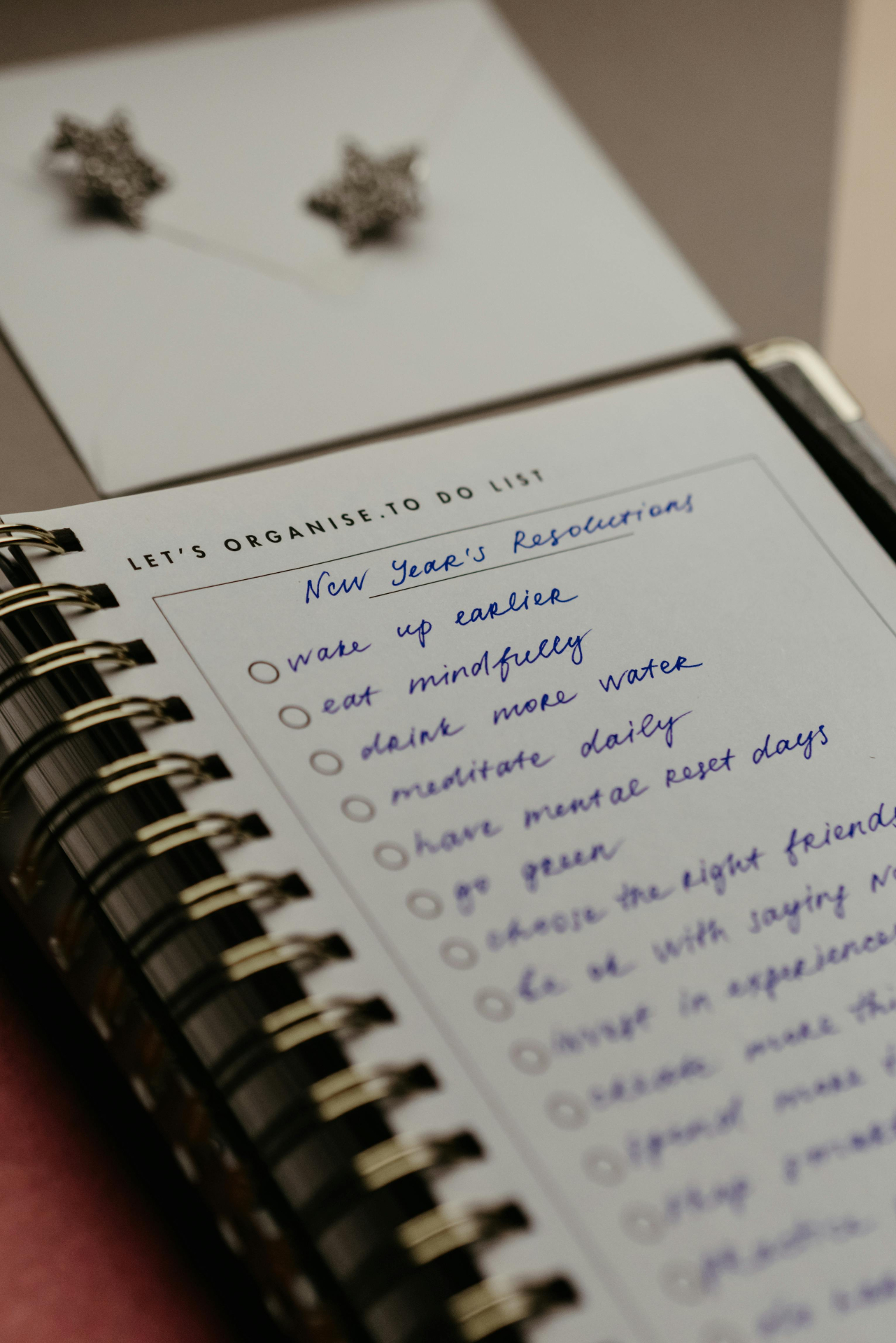
“New Year, New Me!” We’ve all been there. We attempt to do the things we’ve put off for the last 11 months, only to repeat the cycle again and again. As I reflect on my previous New Year’s resolutions, I often wonder why they have all failed in the past. I mean, have you (or someone you know) ever heard someone still talking about their resolution in October? I know I haven’t.
Let’s take a look at what often goes wrong with New Year’s resolutions—and how we can learn from those patterns to create real, lasting change.
Why Resolutions Fail
- Resolutions are built on perfectionism, not true change. You create a resolution hoping to be perfect, right? One slip, and you ditch the entire thing. It’s hard to maintain perfection, so we scratch the whole plan. Instead of offering yourself grace, you may believe you need to provide a reason or even a punishment (for example, stricter dieting or saving even more) to make up for the misstep. This “all-or-nothing” thinking doesn’t support sustainable behavior change or emotional health.
- Resolutions often brig stress. Big, dramatic life changes often create stress. Even thinking about changing your diet, getting more sleep, quitting drinking or smoking, or tackling debt can make your heart beat a little faster, right? Many resolutions fail because they activate stress, and your nervous system naturally wants to eliminate that stress. When something feels overwhelming, the body often resists it—even if the change is positive.
- Resolutions often rely on motivation, not structure. January motivation tends to fade by mid-February (and let’s be honest—sometimes by mid-January). Without the correct support, your motivation fades, intention collapses, and the mind returns to familiar patterns. In order to set yourself up for success, you need to have the motivation and structure to truly begin change.
- Resolutions are often too vague and too big.
“This year I’m going to eat healthier.”
“This year I’m going to be more patient.”
“This year I’m going to get organized.”
These are goals that require a lot from you, in many different areas of life. Although they are great things to do, it’s hard to know exactly where to start. These actions aren’t easily trackable, which means that you will have a hard time accomplishing them, which can lead to discouragement.
5. Resolutions skip reflection. New Year’s resolutions are often set without truly examining last year’s patterns, stressors, or emotional triggers. This means that instead of tackling the issue, we will often repeat the same cycles of behavior. How can we truly know what needs to be changed if we do not reflect? We must reflect prior to enacting change, in order for the change to mean something in our lives.
What Actually Creates Lasting Change
- Start with values, not pressure. Clarifying what matters most to you is most important, whether emotionally, relationally, spiritually, or personally. You should build your habits on things you want to accomplish. If you want to change, the ultimate motivation will be you! Think to yourself, “If this change worked, what would it give me emotionally, mentally, or relationally?” When our behaviors align with our values, our nervous system experiences coherence rather than resistance.
- Make change small enough to feel safe. Your nervous system often resists sudden, overwhelming change—even when the change is healthy. Introducing smaller, micro-habits often reduce threat and increase follow through for your desired outcome (think: five minutes is a lot easier and feels safer than sixty). This safety that your nervous system feels allows you to repeat these habits, and repetition leads to change.
- Build structure instead of relying on motivation. Motivation is inherently emotional. Sometimes, I really feel like eating a salad and going to the gym. Other times, I really feel like eating junk food and sleeping all day. See how our feelings fluctuate? However, by building structure we can use that routine, cue, or anchor to remove the emotional decision-making. Instead of saying “do I feel like doing this?”, the question becomes “Where can this fit in my schedule today?” Structure supports consistency even when motivation fluctuates.
- Expect imperfection. Lasting change does not include perfection. I know that is hard to hear, since perfectionism if often what New Year’s resolutions are all about! Someone told me on day one of the new year that they had already failed their resolution, so they trashed the whole thing! Setbacks are not a failure, they are information that you can use to benefit yourself! Lasting change includes a plan for when things inherently do fall apart.
- Track consistency, not perfection. Lasting change is built through consistency, not flawless execution. Progress happens when we show up again and again, even imperfectly. Instead of asking, “Did I do this perfectly?” try asking, “Did I return to this?” Tracking consistency allows you to see patterns over time – what works, what doesn’t, and where support may be needed. This approach reduces shame, builds self-trust, and reinforces the belief that change is something you practice, not something you pass or fail.
True, lasting change doesn’t come from willpower, pressure, or a once-a-year promise. It comes from slowing down enough to understand yourself and creating support that actually fits your life. This is where therapy can be so helpful. Therapy gives you space to notice patterns, explore what’s underneath your behaviors, and understand how your emotions and relationships shape the way you respond to stress. Instead of asking, “What’s wrong with me?” the question gently shifts to, “What’s going on for me, and what do I need?”
For individuals, therapy helps create change by aligning behaviors with values, supporting nervous system regulation, and replacing self-criticism with compassion. For couples, therapy focuses on building emotional safety, improving communication, and helping partners move out of stuck or reactive cycles. For families, therapy offers a place to build shared understanding, healthier boundaries, and new ways of responding to challenges together.
Lasting change isn’t about becoming a completely different person overnight. It’s about becoming more aware, more supported, and more connected to yourself and others over time. And unlike New Year’s resolutions, this kind of change doesn’t quietly disappear by February. It continues to grow, shift, and strengthen as you do. Cheers to 2026!
Support for Lasting Change
If you find yourself wanting real, lasting change—but feeling stuck in old patterns—you don’t have to navigate that alone. Therapy can offer a supportive space to slow down, reflect, and build change that fits who you are and the life you’re living.
At Soulfully Connected Counseling, we support individuals, couples, and families as they work toward greater emotional health, stronger relationships, and meaningful growth. If you’re curious about whether counseling might be a helpful next step, we invite you to reach out or explore working with one of our therapists.
Change doesn’t have to start with a resolution. Sometimes, it begins with a conversation.